
Call-out or first hour: $80–$180
What most Sydney plumbers charge to attend and start work. Ask for it on the phone. Anyone who will not name it has answered a different question.
The plumber you call for the whole house, not just the emergency. Hot water, taps, toilets, leaks, gas and the work behind a renovation, done by a licensed local crew that turns up when it says it will and prices the job before it starts.
Licensed plumbing covers far more than most people picture. Water supply and drainage inside the property, hot water units and their valves, tapware and toilets, gas appliance connections, stormwater pits and downpipes, and every fixture position behind a renovation are all inside it, and all of it carries a licence requirement in NSW.
Knowing that is genuinely useful when you are choosing who to call. A handyman may not legally touch gas, and stormwater is plumbing rather than landscaping. Asking for a licence number before anyone starts takes thirty seconds and rules out the jobs that have to be done twice.


Built in one big push, Lalor Park’s original clay drains are all ageing together, cracked, offset joints under its post-war homes are the suburb’s most common blockage cause.
Houses plumbed from the late 1940s onward largely used copper, which ages well. What ages faster is what joins it: compression fittings, early soldered joints, and the flexible hoses added under sinks and vanities decades later.
That is good news for the repair bill. Sound copper with one failed joint is a small job, and there is no case for replacing a system that is doing its work. The parts worth being proactive about are the flexis, which have a service life measured in years and fail without warning.
Narrow, rough-walled clay lines catch kitchen grease and flushed wipes far more easily than modern pipe, building blockages that need a jetter to shift.
A shop, café or clinic has constraints a house does not: a health standard to hold, staff arriving at a fixed time, and revenue that stops the moment the doors do not open. Most of what we do for local businesses is therefore scheduled outside trading hours by choice, not by emergency.
If you run a food premises, the honest conversation is about intervals. A grease line jetted on a schedule is cheaper than the same line cleared at emergency rates twice a year, and it does not close you on a Friday night.
Height above the reservoir sets your incoming water pressure, and around Lalor Park that can vary noticeably street to street. High on the slope you may be living with less than you would like; low down, the opposite problem quietly shortens the life of every flexible hose and mixer in the house.
Streets falling toward Lalor Creek push heavy runoff through decades-old stormwater lines that silt up and surcharge in Western Sydney’s summer storms.
Both are fixable and neither needs guesswork. A gauge on an outside tap takes two minutes and tells us whether you need a pressure limiting valve, a new one because the existing one has failed, or something else entirely.
The moment worth planning for is a renovation. New fixtures, a second bathroom or a kitchen moved to the other side of the house all put more through a line that was sized and laid for a smaller household.
A camera run before the tiler starts costs a fraction of what it costs afterwards, and it is the difference between finding a sagging section while the slab is open and finding it through a finished floor. If you are getting quotes for a bathroom, get this done in the same fortnight.
Stormwater is licensed plumbing work in NSW, and that surprises people who assume a grate and a pit are landscaping. Pits, downpipe connections, charged lines and the point where your property discharges to the street or an easement all sit inside the Plumbing Code, and getting them wrong moves water into a neighbour's yard instead of off yours.
It is worth asking any tradesperson quoting stormwater work for their licence number before they start. A landscaper can dig the trench. The connection at either end is ours.
What most Sydney plumbers charge to attend and start work. Ask for it on the phone. Anyone who will not name it has answered a different question.
The standard weekday range once the first hour is done. After-hours and weekends sit higher, because someone is out of bed for it.
Tap and mixer replacements, toilet repairs, a failed valve, swapping tired flexible hoses. Attendance plus the work plus minor parts.
Elements, thermostats, valves and anodes on a tank with life left in it. A full replacement is quoted separately and depends on the unit.
Renovation rough-in, gas line work, anything needing excavation or a second pair of hands. You get a written figure before it starts.
Figures reflect the 2026 Sydney market rather than a quote. You get your own number, in writing, first. Figures here are indicative of the 2026 Sydney market rather than a quote from us, you get your own number as a fixed price before any work starts.

You get a tradesperson on the phone rather than a booking agent reading a script. Most faults can be narrowed down from the description alone, including the ones that do not need a visit.
Whoever is working closest to Lalor Park takes it, which is why same-day is usually possible and why the van already carries what the job is likely to need.
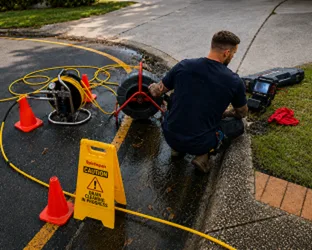
We find the actual cause rather than the visible symptom, show you, and give you a fixed figure. You decide with the number in front of you.

The repair is finished and proven on the spot, the site is left tidy, and any certificate the work requires comes with it.
Send it through and you will get a call from a tradesperson rather than a sales team, with an honest read on whether it can wait.
Straight answers on licences, cost, urgency and what happens on the day.

Ring us and a tradesperson picks up. Or leave your details and we will call back with a window we can actually meet.

Leave your details and our local Lalor Park team will call you back fast.